The Influence of Logical Puzzles on Conflict Resolution: Negotiation and Mediation Strategies
The Role of Puzzles in Navigating Conflict
Conflicts, whether in personal relationships, workplace dynamics, or diplomatic negotiations, often require a thoughtful and nuanced approach to resolution. One innovative avenue that has gained traction is the incorporation of logical puzzles into strategies for negotiation and mediation. The ability to engage with and solve puzzles not only promotes enhanced problem-solving skills but also aids individuals in navigating complex interpersonal situations.
To understand how logical puzzles influence conflict resolution, it is crucial to explore several key components:
- Critical Thinking: Engaging with puzzles, such as Sudoku or crosswords, requires individuals to think critically and analytically, which is essential for assessing disputes. For instance, in mediation scenarios, the ability to dissect information and evaluate the motivations behind each party’s stance can lead to more informed negotiation tactics.
- Creative Solutions: Puzzles often necessitate unconventional thinking, prompting individuals to devise innovative solutions that may not be immediately apparent. An example of this can be seen in workplace conflict, where a team tasked with a challenging problem might employ brainstorming sessions inspired by puzzle mechanics, breaking down the issues into manageable parts and exploring new perspectives.
- Emotional Regulation: The act of solving puzzles has been shown to reduce stress and improve focus. During heated negotiations, the ability to maintain composure is paramount. By engaging with puzzles as a means of practicing mindfulness and emotional control, individuals can approach conflicts with a clearer mindset, ultimately leading to more productive discussions.
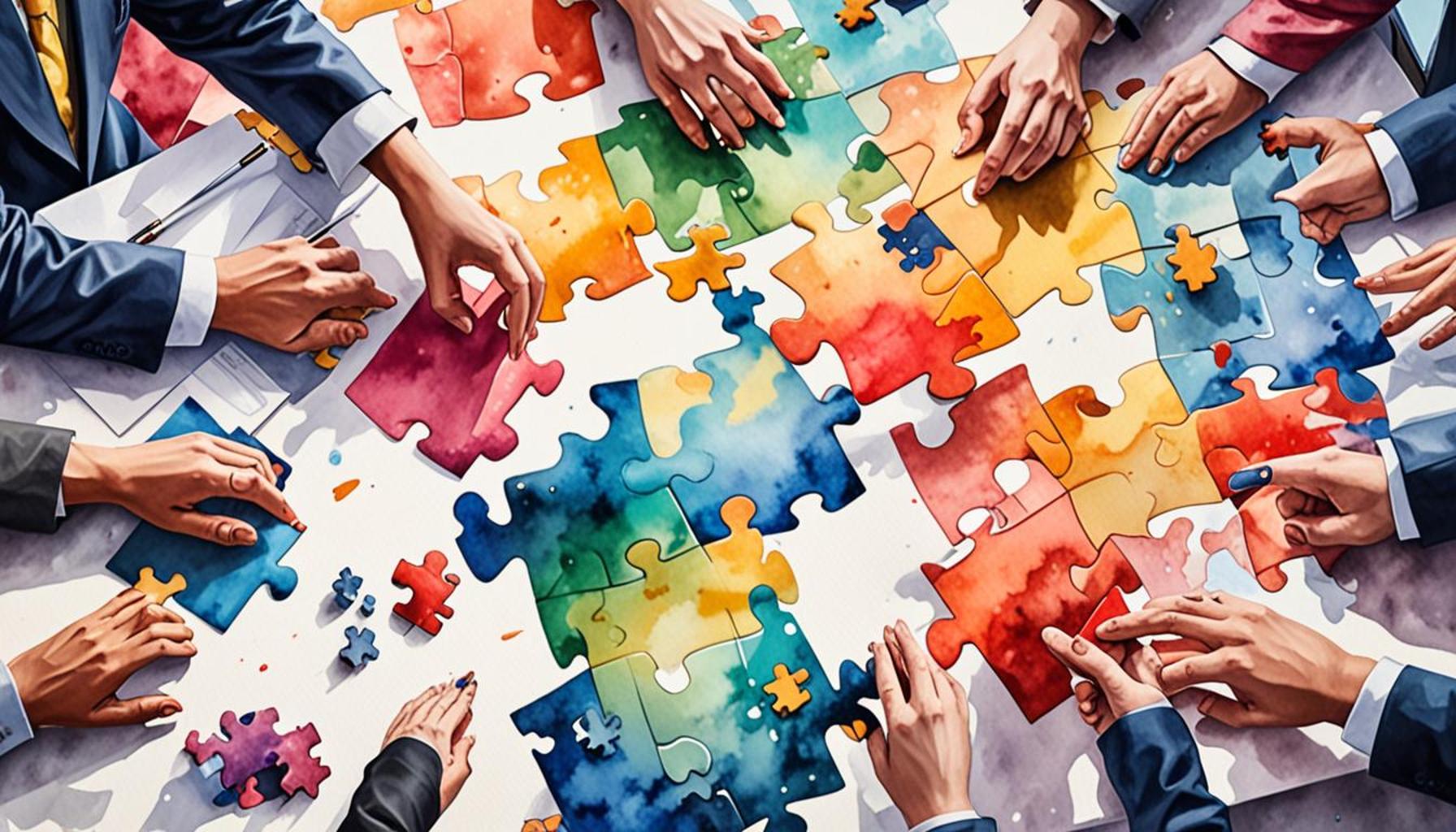
The fusion of logic-based strategies with emotional intelligence can be a game changer in conflict resolution. This integration encourages an environment of collaboration, where each party feels heard and respected, paving the way for more equitable outcomes. In many cases, understanding one another’s perspectives—much like piecing together a jigsaw puzzle—can foster a stronger relationship and mutual respect.
Research has highlighted the effectiveness of puzzle-solving in enhancing group dynamics and negotiation skills. For example, a study conducted by the Harvard Negotiation Project revealed that incorporating cognitive games in team-building activities led to improved communication skills and better conflict management among participants. This practical application underscores the transformative potential of puzzles not just in formal negotiations, but in everyday interpersonal interactions.
As we delve deeper into the fascinating connection between logic and conflict resolution, it becomes clear that these mental exercises can sharpen our negotiation skills while fostering an atmosphere conducive to cooperation and compromise. The next sections will illuminate practical techniques and share insightful case studies, revealing how puzzle-solving not only reshapes negotiations but also enhances the fundamental dynamics of our interactions.

DISCOVER: Click here to uncover the evolution of strategy games
Enhancing Negotiation Skills through Puzzles
In the realm of conflict resolution, practical skills play a crucial role in navigating complex conversations. Logical puzzles serve as an innovative method to sharpen these skills, particularly in negotiation scenarios. When individuals engage with logical challenges, they cultivate a range of cognitive abilities that directly translate into more effective negotiation strategies.
One fundamental aspect that logical puzzles enhance is analytical thinking. This skill allows negotiators to break down disputes into their core elements, which is vital for identifying underlying interests and potential solutions. For instance, in the context of a business negotiation, understanding each party’s priorities can pave the way for a satisfactory agreement. A negotiator well-acquainted with analytical challenges is likely to approach conflicts with a structured thought process, leading to clearer communication and better outcomes.
Moreover, engaging in logical puzzles has been shown to boost collaborative problem-solving skills. By working on puzzles, whether alone or in teams, individuals learn to pool their knowledge and perspectives to find solutions. This collaborative approach mirrors the dynamics of negotiation, where multiple stakeholders must work together to achieve a common goal. For example, a study conducted by the American Psychology Association illustrated that team members who solved puzzles together demonstrated improved trust and communication, vital ingredients for successful negotiation.
Logical puzzles also introduce the concept of strategic thinking. Many puzzles require the solver to anticipate future moves and outcomes based on the current state of play. This forward-thinking ability can be directly applied to negotiation scenarios where anticipating the reactions of counterparts is essential. A negotiator who can foresee potential objections or counteroffers is better equipped to navigate the discussion, making it crucial to practice strategic thinking through puzzle-solving.
Additionally, the mind-stimulating nature of puzzles fosters a sense of patience and persistence. Negotiations can often become lengthy and wrought with tension. However, those who practice solving puzzles develop the resilience needed to weather the storm of conflicting interests and emotions. By honing these traits through regular puzzle engagement, negotiators can maintain composure even in the face of adversarial tactics.
Furthermore, the benefits of logical puzzle-solving extend beyond individual skill enhancement to impact group dynamics as well. When teams engage in puzzle-related exercises, they not only strengthen their problem-solving abilities but also cultivate an environment of open communication and respect. This atmosphere is crucial in conflict resolution, as it allows for more equitable participation from all parties involved. The synergy developed through teamwork in puzzle-solving can be instrumental in achieving lasting resolutions in tense negotiations.
In summary, logical puzzles contribute significantly to the development of essential negotiation and mediation strategies. The cultivation of analytical thinking, collaborative problem-solving, and strategic thinking are just a few of the many ways in which these mind-bending challenges can enhance a negotiator’s toolkit. As we explore further, we will examine specific techniques for integrating puzzle-solving into negotiation training and present real-world examples of successful applications.
The Role of Logical Puzzles in Mediation Techniques
In conflict resolution, logical puzzles serve not merely as intellectual exercises but as powerful tools to enhance negotiation and mediation strategies. By incorporating logical puzzles into training and practical applications, mediators and negotiators can facilitate a deeper understanding of the underlying issues and motivations of the conflicting parties. One significant advantage is the development of critical thinking skills. When individuals engage with logical puzzles, they learn to analyze situations from various angles, which can be essential in conflict scenarios where emotions may cloud judgment. This enhanced analysis aids in identifying mutual interests, promoting a collaborative environment. Moreover, logical puzzles encourage creativity in finding solutions. During negotiations, conventional approaches may lead to stalemates; however, the unconventional nature of puzzles inspires individuals to think outside the box. This can lead to innovative solutions that satisfy the needs of both parties and pave the way for ongoing cooperation.Another important element is the teaching of patience and persistence. Solving a puzzle often requires time and effort, mirroring the conflict resolution process itself. Participants learn that not every solution is immediate; rather, it might take consecutive attempts to reach a resolution. This mindset fosters resilience, which is crucial in any negotiation or mediation setting.These aspects highlight how logical puzzles not only provide entertainment but serve as valuable instruments in conflict resolution. As negotiators and mediators adopt these strategies, they become more adept at navigating complex interpersonal dynamics, ultimately contributing to better outcomes in various contexts, such as workplace conflicts, community disputes, and international negotiations.
| Category | Description |
|---|---|
| Critical Thinking | Enhances the ability to analyze situations, leading to better understanding of interests. |
| Creative Solutions | Encourages thinking outside traditional approaches, fostering innovative agreements. |
DISCOVER MORE: Click here to boost your cognitive skills
Integrating Puzzle-solving into Negotiation Training
As the importance of logical puzzles in enhancing negotiation skills becomes evident, the next logical step is to explore how to effectively incorporate these mental challenges into negotiation training programs. Organizations seeking to improve their conflict resolution strategies can benefit greatly from structured activities that revolve around puzzle-solving. These exercises not only serve as an alternative training method but also contribute to building a stronger, more cohesive team dynamic.
One highly effective approach involves team-building workshops that focus on collaborative puzzle-solving tasks. During these workshops, participants are divided into small groups and presented with logical challenges that require collective effort to solve. Such activities promote essential negotiation traits like trust, effective communication, and mutual respect. A noteworthy example comes from a 2021 study published in the Journal of Applied Psychology, which found that teams engaging in collaborative puzzles experienced a 30% improvement in group cohesion and overall effectiveness during real-world negotiations.
Another promising method is the use of puzzle-based scenario simulations. By presenting negotiators with realistic, puzzle-oriented scenarios that mimic high-stakes negotiations, trainers can facilitate an engaging environment for learning. For instance, simulations featuring a series of contractual trade-offs, where each party must solve a puzzle to advance their position, encourage negotiators to think critically about their approach while facing challenging obstacles. These hands-on experiences not only reinforce strategic thinking but also allow participants to experiment with different negotiation tactics without the risk of real-world repercussions.
In addition to these strategies, leveraging technology to create digital puzzle platforms can further enhance training outcomes. Online platforms that feature logical puzzles can provide on-demand learning opportunities, allowing negotiators to practice independently at their own pace. Numerous online resources present puzzles ranging from classic brainteasers to complex logic problems, catering to various skill levels. Research conducted by TechCrunch in 2020 highlighted that engaging with digital puzzles led to a significant uptick in critical thinking skills in participants, making it an excellent tool for professional development.
Moreover, the integration of mindfulness techniques during puzzle-solving activities can amplify the inherent benefits. As negotiations can often induce stress, encouraging participants to practice mindfulness while engaging with logical challenges can foster emotional regulation and enhance decision-making abilities. A 2019 study featured in the Journal of Conflict Resolution showed that mindfulness training during negotiation phases led to a 40% increase in effective conflict resolution outcomes. By teaching negotiators to remain calm under pressure, trainers can further refine their integrative negotiation techniques.
Incorporating logical puzzles into negotiation training also extends into the realm of ongoing professional development. Regularly scheduled puzzle-solving sessions can act as icebreakers during team meetings, offering a fun, engaging way to improve cognitive skills while also encouraging team bonding. By normalizing the practice of regular puzzle engagement, organizations can create a culture where analytical thinking and creative problem-solving are valued, ultimately providing a competitive advantage in conflict resolution.
The practical applications of logical puzzles in negotiation training create a compelling case for their inclusion in conflict resolution strategies. From team-building workshops to innovative simulation techniques, the possibilities are extensive. As we delve deeper, the following discussion will illuminate specific case studies that exemplify the success of integrating puzzle-solving in real negotiation scenarios.
DISCOVER MORE: Click here to unlock your creativity
Conclusion
As we unravel the intricate relationship between logical puzzles and conflict resolution, it becomes clear that their utility extends far beyond mere entertainment. The integration of logical puzzles into negotiation and mediation strategies not only enhances critical thinking and collaborative problem-solving but also fosters essential interpersonal skills that are crucial in tense situations. By engaging participants in collaborative puzzle-solving workshops and scenario simulations, organizations are essentially training teams to approach negotiations with greater creativity, patience, and strategic foresight.
The evidence presented underscores the efficacy of these methodologies. With studies indicating up to a 40% increase in successful conflict resolution outcomes and a 30% improvement in group cohesion, it is evident that logical puzzles can transform the negotiation landscape. Additionally, the fusion of technology by utilizing online platforms enables ongoing professional development in a flexible manner, catering to diverse skill levels while promoting a culture of analytical thinking within organizations.
In a world where conflict resolution is a necessity, the adoption of logical puzzles represents an innovative path forward. By prioritizing puzzle-solving exercises, organizations can cultivate a dynamic wherein team members not only thrive on challenges but also build robust relationships founded on trust and effective communication. The future of conflict resolution strategies beckons practitioners to tap into the profound potential of logical puzzles—ensuring that every negotiation is not just a transaction but an opportunity for growth and collaboration.