The Importance of Brain Teasers in Children’s Cognitive Development

Brain teasers are more than just fun puzzles; they serve as a gateway to enhancing cognitive development in children. These engaging challenges stimulate young minds and cultivate essential thinking skills crucial for their growth. As parents and educators increasingly seek innovative ways to boost brain power, understanding the impact of such exercises becomes vital.
Why Brain Teasers Matter
Incorporating brain teasers into children’s daily routines can lead to remarkable benefits, fostering skills that will not only help them academically but also in everyday life:
- Improved Problem-Solving Skills: Children learn to approach problems from different angles. For example, a simple riddle may encourage them to consider multiple possible answers before arriving at the solution.
- Enhanced Critical Thinking: Teasers promote logical reasoning and analytical skills. Engaging with complex puzzles challenges children to analyze information carefully and decide on the best course of action.
- Boosted Memory Retention: Engaging with various puzzles helps strengthen memory pathways. For instance, solving a sequence of number games can facilitate better retention of numerical concepts and patterns.
Types of Brain Teasers
Brain teasers come in many forms, each catering to different aspects of cognitive growth:
- Riddles: Encourage creative thinking and wordplay. A riddle like “What has keys but can’t open locks?” not only entertains but also trains children to think abstractly.
- Logic Puzzles: Enhance deductive reasoning. Logic grid puzzles, which require players to use clues to arrive at a solution, can teach children effective strategies for breaking down complicated problems.
- Number Games: Foster mathematical skills and pattern recognition. Games like Sudoku or math-related puzzles improve numerical fluency, make math enjoyable, and encourage mental agility.
Encouraging children to engage with brain teasers can set the foundation for lifelong learning. Furthermore, these activities not only entertain but also shape how young minds learn to interact with the world. The journey into the realm of brain teasers opens up a fascinating world, inviting both children and adults to discover the joy of thinking critically and creatively.
Real-World Applications
Beyond just enhancing cognitive abilities, brain teasers can be integrated into various educational settings or family game nights, making learning fun. For instance, educators can use riddles to introduce a new topic in class, and families can incorporate logic puzzles during dinner to stimulate conversation. In doing so, children learn to collaborate, communicate, and engage with one another, skills that are indispensable in today’s interconnected society.
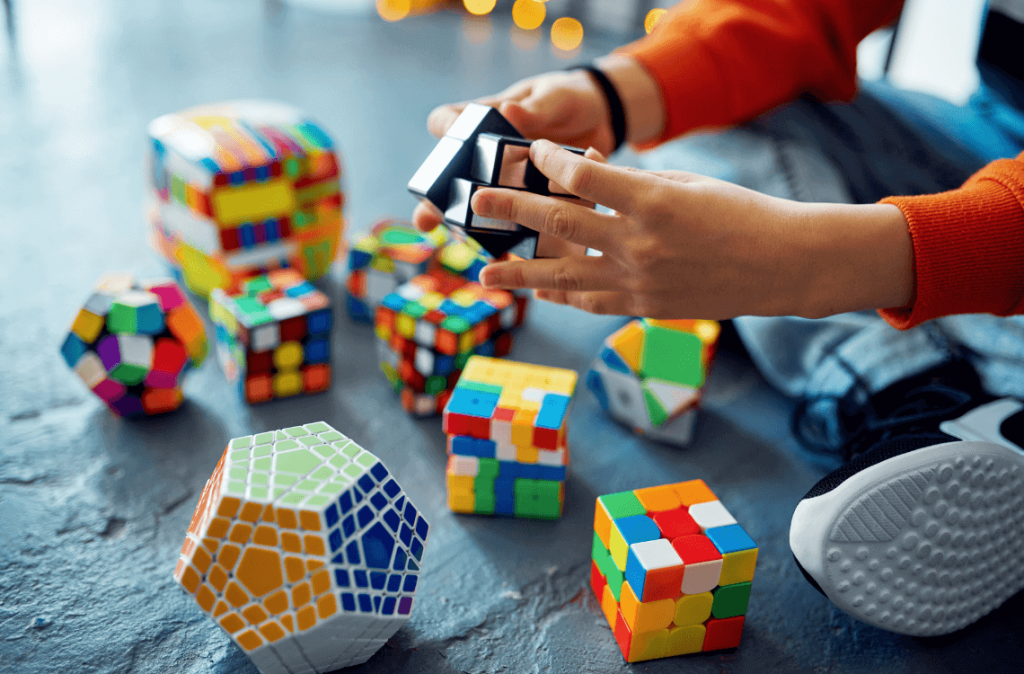
Brain teasers represent a simple yet effective method for nurturing essential skills that lay the groundwork for a child’s academic and personal success. By encouraging this form of playful learning, parents and educators can help children develop their cognitive abilities, ensuring they are well-equipped to tackle the challenges they may face in the future.
DISCOVER MORE: Click here to learn about the cognitive benefits of strategy games
Unlocking Potential Through Play
Brain teasers serve as powerful tools for engaging young minds, igniting a sense of curiosity and exploration that lays the groundwork for profound cognitive development. This playful learning approach goes beyond mere entertainment; it encapsulates a range of learning experiences that contribute significantly to a child’s intellectual growth. By weaving brain teasers into daily activities, children are encouraged to actively solve problems and think creatively, skills that are essential not only for academic success but for practical life applications.
Research increasingly supports the idea that cognition is enhanced through interactive and stimulating challenges. When children encounter brain teasers, they are faced with opportunities to experiment with logic, navigate complex scenarios, and develop effective strategies for resolution. According to a study from the American Psychological Association, early engagement with puzzles and problem-solving can foster stronger cognitive abilities, which ultimately translates to better performance in school. This aligns with the notion that foundational skills in reasoning and creativity tend to flourish when nurtured through play.
Core Cognitive Skills Fostered by Brain Teasers
The array of cognitive skills honed through brain teasers is vast. Here are some of the key competencies enhanced through these mental challenges:
- Analytical Thinking: Brain teasers encourage children to assess not just the surface-level details, but to probe deeper into the context of the challenge. Activities like logic puzzles cultivate an analytical mindset, vital for future academic endeavors.
- Creative Thinking: Engaging with riddles and wordplay stimulates creativity. Children learn to think outside the box, finding unique solutions or interpretations that may not be immediately obvious.
- Perseverance: As children grapple with particularly challenging puzzles, they learn the value of persistence. Missing the answer on the first try teaches them resilience and the importance of striving for success despite initial setbacks.
- Collaboration: When solved in groups, brain teasers foster teamwork and communication. Children learn to express their thoughts and strategies clearly, gaining crucial social skills that extend beyond the classroom.
These skills are intrinsically valuable, contributing to overall cognitive development while enhancing a child’s ability to navigate both academic and social landscapes. Moreover, skills honed through brain teasers often create a momentum for learning that encourages children to explore new subjects with enthusiasm and confidence.
Incorporating brain teasers into various aspects of a child’s life, from homework help to family game nights, transforms routine into rich learning experiences. As children engage with these stimulating activities, they not only enhance their cognitive abilities but also foster a lifelong love of learning and discovery. This investment in cognitive development today holds the promise of shaping capable, critical thinkers for tomorrow.
| Advantages | Impact on Development |
|---|---|
| Enhanced Problem-Solving Skills | Brain teasers encourage children to think critically and approach challenges systematically, fostering resilience. |
| Improved Memory Retention | Working through brain teasers boosts working memory as children recall information and apply it in various contexts. |
| Stimulated Creativity | Engagement with puzzles leads children to think outside the box, which is vital for creative thinking. |
| Increased Attention Span | Tackling brain teasers helps children develop concentration, enabling them to focus for longer periods. |
Brain teasers are not merely entertaining diversions; they serve as essential tools in enhancing a child’s cognitive abilities and overall intellectual growth. Engaging in these stimulating activities provides children with unique opportunities to explore their thinking patterns, empowering them to unlock latent skills and adapt to continuously evolving challenges. As children face varied puzzles, they must navigate through misinformation and distractions, allowing them to cultivate a more discerning thought process. Through regular practice, children can learn to associate patterns, derive logical connections, and approach problems with newfound confidence. Notably, the act of solving brain teasers can also result in improved academic performance by translating skills learned in these exercises to real-world applications. With cognitive development resting at the core of brain teaser activities, parents and educators are encouraged to integrate these tools into daily routines to maximize young learners’ potential.
DISCOVER MORE: Click here to dive deeper
Enhancing Problem-Solving Skills
Brain teasers are not just puzzles; they are gateways to developing effective problem-solving skills in children. In today’s fast-paced world, the ability to tackle challenges creatively and analytically is increasingly vital. Engaging with brain teasers encourages children to embrace ambiguity, question assumptions, and explore multiple avenues for solutions. This kind of mental workout prepares them for complex real-life situations, enabling them to adapt and respond effectively.
The process of working through a brain teaser often involves a cycle of hypothesis, trial, and error. Research conducted by the National Association for Gifted Children suggests that early exposure to challenges that require reasoning can significantly enhance cognitive flexibility. For instance, while solving a math riddle, a child may first approach it using addition, only to realize that subtraction might yield a more straightforward solution. This experience not only cultivates their mathematical skills but also heightens their capacity to switch between different problem-solving strategies.
Cognitive Benefits Supported by Technology
With the advent of technology, brain teasers are becoming more accessible and diverse. Smartphone apps and interactive online platforms offer a plethora of puzzles and riddles that can adapt to different skill levels, making it easier for children to engage with cognitive challenges. Studies show that children using educational technology that incorporates brain teasers exhibit improved memory retention and cognitive processing speed. This evidence reinforces the idea that combining traditional problem-solving with technology enriches the learning experience.
Moreover, digital brain teasers often integrate visual and auditory cues, appealing to various learning styles. Children who may struggle with traditional learning methods could find that engaging with interactive content notably aids their understanding and retention. The multifaceted approach offered by these platforms not only makes learning enjoyable but also provides tailored cognitive challenges that keep children motivated.
The Role of Parents and Educators
Parents and educators play a crucial role in nurturing this aspect of a child’s development. By incorporating brain teasers into family activities or classroom settings, adults can create an enriching environment that promotes continuous learning. Activities such as scavenger hunts, logic-based games, and group puzzles foster a collaborative atmosphere where children learn from one another while developing their problem-solving skills. This collaborative learning experience is particularly beneficial for social skill development as it encourages communication and teamwork.
Furthermore, educators can leverage brain teasers in curricula to supplement lessons across subjects. Math problems that integrate logical reasoning or science questions that require critical thinking can make traditional subjects more engaging. Incorporating various types of brain teasers stimulates interest and facilitates deeper understanding, ensuring that cognitive development occurs in an enjoyable context.
In summary, brain teasers facilitate holistic cognitive growth through interactive and engaging experiences. By enhancing problem-solving abilities, integrating technology, and creating supportive learning environments, parents and educators can significantly influence a child’s cognitive development trajectory.
DISCOVER MORE: Click here to enhance your skills
Conclusion
In conclusion, the role of brain teasers in children’s cognitive development cannot be overstated. As engaging tools for enhancing critical thinking, creativity, and problem-solving skills, these mental challenges offer multifaceted benefits that extend beyond simple entertainment. By stimulating cognitive flexibility, brain teasers prepare children to navigate complexities with confidence and a growth-oriented mindset.
The integration of technology further enhances learning experiences, providing diverse options that cater to varying interests and learning styles. This accessibility enables children to adapt their cognitive strategies in real-time, allowing them to derive enjoyment and satisfaction from overcoming challenges. As research indicates, the cognitive benefits gained from these activities contribute to improved memory retention and quicker processing speeds, establishing a solid foundation for lifelong learning.
Moreover, the involvement of parents and educators in this process is critical. By actively participating in brain-teaser activities, they can create an environment of collaboration that not only enriches individual learning but also strengthens social skills among peers. This dimension of learning fosters communication, teamwork, and shared problem-solving, essential traits in today’s interconnected society.
Ultimately, incorporating brain teasers into daily routines can yield remarkable dividends in cognitive development. As we continue to recognize the interplay between playful learning and effective education, fostering a love for challenges through brain teasers remains a pivotal step in equipping children with vital skills for their futures. It is an investment in their ability to think critically and creatively, ensuring they can tackle any obstacle that comes their way.