Social Memory Challenges: Building Relationships and Teamwork Through Collaborative Puzzles
The Rise of Collaborative Team-Building Activities
In today’s fast-paced and technologically driven world, many individuals find themselves in remote or hybrid workplaces, where face-to-face interactions are limited. In this environment, collaborative puzzles have emerged as an innovative solution to bridge the gap between colleagues, nurturing the foundations of teamwork and camaraderie. Beyond being tools of entertainment, these engaging tasks can become pivotal in enhancing social memory, which is the ability to recall social interactions and experiences with others.
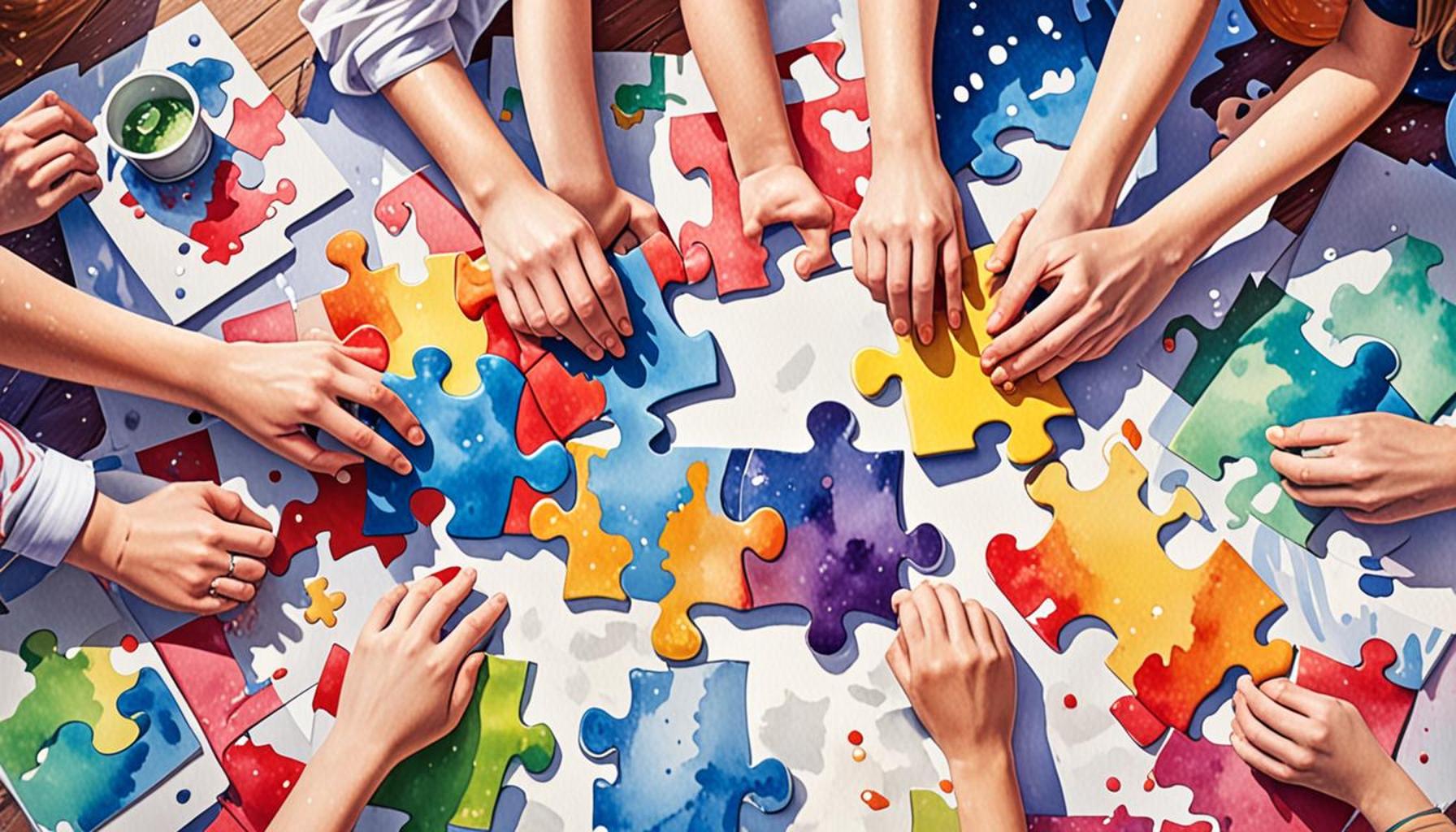
When teams come together to solve a puzzle, whether in the form of a jigsaw, escape room challenge, or logic problem, several noteworthy benefits arise. Firstly, participants experience a strengthened communication dynamic. Effective communication is paramount in any organization, and working collaboratively on puzzles encourages team members to articulate their thoughts clearly while actively listening to one another’s input. For instance, discussing the best strategy to approach a jigsaw puzzle fosters an open dialogue that can translate effectively into workplace discussions.
Additionally, collaborative puzzles lead to improved problem-solving skills. Participants naturally engage in strategic planning and critical thinking as they evaluate various pieces of a puzzle or brainstorm solutions together. A notable example is the increasing popularity of virtual escape rooms where teams must piece together clues through collaboration. In these scenarios, members draw on diverse perspectives, which can lead to innovative solutions that might not surface in a typical meeting setting.
Moreover, sharing the responsibility of completing a puzzle cultivates increased trust among team members. When individuals feel supported and valued within a group, it fosters mutual respect and cooperation, laying the groundwork for a harmonious workplace culture. For example, when a team conquers a challenging task together, they build a shared sense of achievement that strengthens their bond and amplifies their collective efficacy.
By integrating social memory challenges into both corporate and community settings across the United States, organizations can experience transformative effects. Puzzles transform simple acquaintances into cohesive units capable of overcoming significant obstacles. Teams that puzzle together often find themselves better equipped to face professional challenges ahead, as they carry forward the trust and communication skills developed during these exercises.
In conclusion, collaborative puzzles serve as more than just brain-teasers; they are a powerful catalyst for growth and synergy within teams. By recognizing their potential, organizations and communities can foster environments where individuals excel not only in task completion but also in personal connections.
DIVE DEEPER: Click here to uncover the evolution of logical puzzles
The Benefits of Engaging in Collaborative Puzzles
Collaborative puzzles are not merely tools for entertainment; they serve a greater purpose in fostering team dynamics and enhancing social memory. When team members engage in these shared tasks, they unlock a myriad of benefits beyond the satisfaction of completing a challenge. Perhaps most importantly, puzzles help create shared experiences that are vital for building strong interpersonal connections.
One of the most compelling aspects of working on puzzles collaboratively is the role it plays in promoting emotional intelligence among participants. Emotional intelligence, or the ability to understand and manage one’s own emotions and those of others, is crucial in any collaborative effort. Engaging in puzzles allows team members to navigate frustrations, celebrate small victories, and practice empathy as they work together. For example, when faced with a tricky puzzle piece that doesn’t seem to fit, team members are encouraged to support one another, fostering an environment of collaboration instead of competition.
Statistics further underline the significance of collaborative puzzles in strengthening team relationships. According to a recent study by the American Institute of Stress, team-building activities, including puzzles, can lead to a 22% increase in job satisfaction and a 52% increase in communication efficiency. This correlation not only emphasizes the importance of social interaction in a workplace setting but also showcases how shared challenges can lead to greater engagement among employees.
Boosting Team Cohesion Through Puzzles
Working on puzzles also has a remarkable capacity for enhancing team cohesion. Team cohesion is characterized by the degree to which team members stick together and support one another, which is essential for a productive workforce. This phenomenon occurs for several reasons:
- Shared Achievement: When a team completes a puzzle, they experience a collective victory that strengthens their bond and encourages them to rely on one another in the future.
- Trust Building: As individuals collaborate, they expose their vulnerabilities and showcase their strengths, leading to a deeper understanding of each other’s capabilities.
- Conflict Resolution: Puzzles present opportunities for friendly disagreement and dialogue, allowing team members to practice resolving differences in a low-stakes environment.
Furthermore, engaging with puzzles can significantly reduce feelings of isolation that remote and hybrid workers often face. In the context of a virtual workspace, digital collaborative puzzle platforms allow employees to connect in meaningful ways, transcending geographical barriers and promoting a sense of belonging. Facilitated teamwork through these puzzles fosters relationships that extend beyond the proverbial water cooler, enhancing overall workplace morale.
In essence, by prioritizing collaborative puzzles as a central component of team-building initiatives, organizations can foster an environment imbued with trust, understanding, and camaraderie. These shared experiences evolve into lasting memories that reinforce team identity and allow individuals to collaborate more effectively in the future. As organizations strive for success in an increasingly complex work environment, the embrace of social memory challenges presents an invaluable opportunity for businesses to invest in the health and productivity of their teams.
| Category | Advantages |
|---|---|
| Enhanced Communication | Social memory challenges encourage participants to discuss strategies, share ideas, and express themselves, improving overall communication skills. |
| Strengthening Relationships | Working together on puzzles fosters trust and camaraderie, enabling individuals to develop deeper connections that can extend beyond the game. |
The theme “Social Memory Challenges: Building Relationships and Teamwork Through Collaborative Puzzles” presents a unique opportunity to nurture interpersonal skills in engaging ways. As participants tackle puzzles together, they learn to navigate challenges collectively, which cultivates problem-solving abilities within a team setting. This dynamic not only enhances participant engagement but also stimulates a sense of achievement when completing objectives together.Consider the cognitive aspects as well; the various dimensions of memory and attention activated during collaborative play can lead to improved mental agility. These events serve as a breeding ground for creativity, allowing individuals to bring diverse perspectives to the table. Furthermore, the thrill of teamwork ignites a playful competitive spirit that fosters a positive environment for interaction.Exploring how “Social Memory Challenges” can impact educational and corporate spheres reflects the growing recognition of collaborative problem-solving as a vital skill set. With the right framework, these challenges can inform training methods, promote teamwork, and inspire innovative approaches to learning in both personal and professional contexts.
DIVE DEEPER: Click here to explore the evolution of strategy games
Enhancing Problem-Solving Skills Through Collaborative Play
Beyond the emotional and relational benefits, engaging in collaborative puzzles significantly enhances problem-solving skills and critical thinking abilities among team members. When individuals work together to piece together a complex puzzle, they are often faced with unique challenges that require creative solutions and innovative approaches. In this context, puzzles act as a microcosm of real-world problems, allowing teams to hone their analytical abilities in a fun and interactive way.
A notable aspect of collaborative puzzle-solving is that it encourages diverse perspectives to come to the forefront. Each team member brings their own thoughts, experiences, and strategies to the table, leading to a rich tapestry of ideas that can propel the team forward. Research indicates that teams that leverage a variety of cognitive styles are 40% more effective at tackling complex problems than those that operate from a singular perspective. This highlights the importance of cultivating a diverse environment, where collaborative puzzles can serve as a practical exercise in teamwork and creative problem-solving.
Cognitive and Memory Benefits
Engagement in collaborative puzzles also offers cognitive benefits, enhancing both individual and collective memory retention. The process of piecing together a puzzle requires active engagement, which stimulates brain function and promotes a sense of achievement. As team members work together, they utilize strategies like verbalizing thoughts, creating mental maps, and employing memory aids to remember where specific pieces may fit. This active participation has been shown to improve cognitive recall by as much as 30%, bolstering social memory as members recollect not only the activity but the shared experience.
- Memory Reinforcement: Emotionally charged activities such as collaborative puzzles create stronger memory traces, making it easier for team members to recall specific details about their colleagues and the tasks they worked on together.
- Learning Opportunities: Participants can learn about different problem-solving techniques and approaches to thinking critically, which can be directly translated to their work environments, enhancing overall productivity.
- Collaborative Memory Formation: The sense of camaraderie established through collaborative puzzles fosters shared memories that can be drawn upon in future interactions, strengthening interpersonal connections.
Furthermore, puzzles can serve as an effective metaphor for everyday challenges in both work and social settings. Just as a puzzle can be solved through teamwork, real-life obstacles often require collaboration and communication among diverse members. By training teams to tackle these challenges together, organizations instill essential skills that transcend the puzzle itself and prepare employees for future collaborative efforts.
Ultimately, engaging in collaborative puzzles doesn’t just bolster team relationships; it cultivates a more adaptable, resilient, and capable workforce. As businesses navigate an ever-evolving landscape, they will find that investing in social memory challenges through puzzle-solving is not only a fun team-building exercise but also a strategic imperative. By enhancing problem-solving skills and pushing the boundaries of cognitive collaboration, organizations position themselves at the forefront of innovation and productivity.
DIVE DEEPER: Click here to discover the cognitive benefits of strategy games
Conclusion: The Transformative Power of Collaborative Puzzles
In an era where strong interpersonal connections and effective teamwork are more critical than ever, collaborative puzzles emerge as an invaluable tool for fostering social memory challenges. These engaging activities not only facilitate the strengthening of relationships among team members but also enhance critical thinking, problem-solving skills, and cognitive engagement. By creating a shared experience, puzzles foster an environment where diverse perspectives flourish, leading to creative solutions and improved collaborative dynamics.
The cognitive benefits derived from working on puzzles together, such as increased memory retention and enhanced recall abilities, highlight the profound impact of shared experiences on social interactions. These challenges encourage individuals to strengthen their collaboration skills, making them better equipped to face real-world obstacles that require teamwork and cooperation.
As organizations strive to cultivate a resilient and adaptable workforce, the strategic use of collaborative puzzles can serve as both an effective team-building exercise and an innovative approach to enhance workplace productivity. Investing in social memory challenges not only prepares employees for future engagements but also promotes a culture of inclusivity and support. In conclusion, engaging in collaborative puzzles goes beyond mere play; it positions teams to thrive in an increasingly complex world while forging deeper relationships and a stronger sense of community.