
Logical Puzzles Explore History Evolution from Antiquity to Digital Age

Discovering the Roots of Logical Puzzles
Throughout history, logical puzzles have captivated minds, transforming complex thoughts into engaging challenges. These puzzles, ranging from ancient riddles to modern brain games, not only entertain but also enhance cognitive abilities and problem-solving skills. In a world increasingly driven by technology, the evolution of these mind games reflects significant shifts in culture, education, and entertainment.
Why Are Logical Puzzles Important?
- Intellectual Development: Puzzles stimulate critical thinking and creativity.
- Cultural Significance: They offer insights into the societies that created them.
- Digital Revolution: Today’s technology has opened new avenues for puzzle creation and accessibility.
As we delve into the fascinating journey of logical puzzles, we will explore their origins and transformations through various eras. This article will also present a ranking of the top 5 logical puzzles that have shaped the landscape of mind games, inviting you to engage with the rich tapestry of human ingenuity. Prepare to challenge your intellect and discover new favorites along the way!
DISCOVER MORE: Click here for essential tips
Top 5: The History and Evolution of Logic Challenges: From Antiquity to the Digital Era
Throughout the ages, logic puzzles and challenges have consistently fascinated human intellect, evolving from simple riddles in ancient times to sophisticated digital conundrums in the present day. This article embarks on an intriguing journey through time, showcasing the evolution of logical puzzles that have both entertained and educated countless generations. Fasten your seatbelts as we explore the top five milestones in the captivating evolution of logic challenges!
5. The Origins of Logic Puzzles in Antiquity
The fascination with logical challenges can be traced back to ancient civilizations, where riddles were deeply embedded in cultural traditions. These early puzzles often blended entertainment with moral and philosophical teachings. One of the most enduring examples comes from Greek mythology: the enigma of the Sphinx. This mythical creature posed riddles to travelers, with dire consequences for the wrong answer. This may have been one of history’s earliest forms of a logical challenge designed to test intelligence and wit.
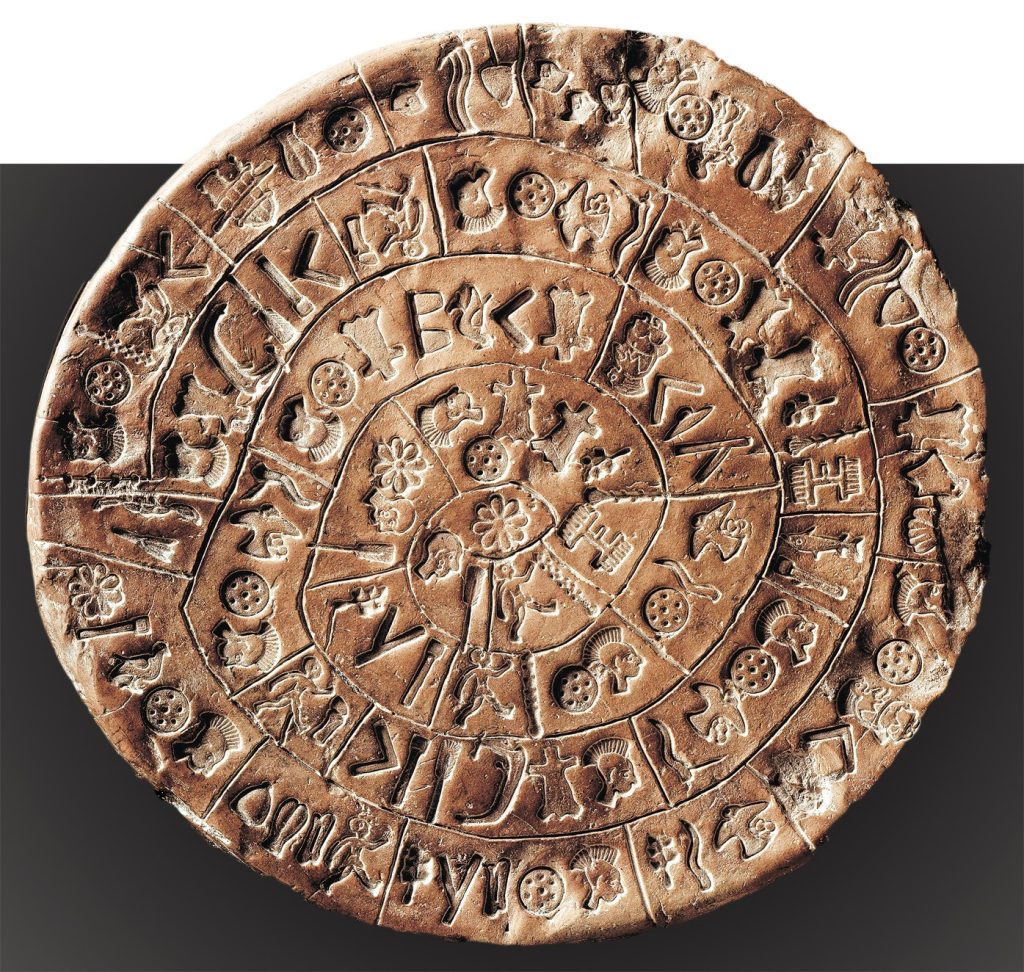
In other parts of the ancient world, such as Mesopotamia, evidence from clay tablets dating back to 3000 B.C. reveals primitive forms of problem-solving that relied on logic and critical thinking. These ancient puzzles were not just intellectual exercises but also served as tools for imparting historical events and cultural values.
Such timeless riddles from antiquity continue to engage audiences worldwide today, underscored by the universal human trait of curiosity and the desire to solve problems. Their enduring appeal demonstrates the foundational nature of logic and problem-solving in human cognition.
4. The Advent of Mathematical Logic in the Middle Ages
The Middle Ages marked a pivotal shift in the nature of logical puzzles, with the introduction of mathematical logic. During this era, logic puzzles transitioned from traditional riddles to more formal systems explored by scholars and mathematicians. Figures such as Gottfried Wilhelm Leibniz advanced the field of logic with their exploration of propositions and the relationships between them.
This period also saw the birth of one of the most famous mathematical puzzles, the “Tower of Hanoi,” which demonstrated ingenuity and mathematical principles. It presented solvers with the challenge of moving disks between pegs according to strict rules, encapsulating the essence of mathematical logic.
- Riddles as Teaching Tools: Teachers incorporated logical puzzles to develop reasoning skills among students, using them as effective educational tools.
- Algorithms: The birth of basic algorithms during this period laid the groundwork for modern computational logic, feeding into the logical challenges of today.
This era illustrated the transition of logic into a critical aspect of education and intelligent reasoning, creating a bridge between casual entertainment and more structured academic pursuit.
3. The Enlightenment and Puzzles of Reason
The Enlightenment era brought a surge of intellectual curiosity and a refined focus on rational discourse and reason. Philosopher-scientists like René Descartes and George Boole became prominent figures in promoting rational thought, formal logic, and systematic approaches to problem-solving.
This period witnessed the burgeoning of puzzle books, which brought complex logical challenges into the homes and minds of the populace. These collections often promoted not only entertainment but the cultivation of critical thinking skills. Chess, regarded as the ultimate game of strategic and logical challenge, flourished as a symbol of intellectual prowess during this time.
Enhancing scientific inquiry, logic puzzles from the Enlightenment period began shaping societal perceptions around reasoning. They carved pathways for the validation of formal logic as essential in scientific methodologies and theories.
2. The Golden Age of Puzzles in the 19th Century
The 19th century is celebrated as the Golden Age of Puzzles, characterized by an explosion of creativity in logical challenges. The widespread dissemination of printed media, such as newspapers, played a crucial role in popularizing puzzles among the masses. The emergence of crosswords and number puzzles like Sudoku turned logic challenges into daily habit-forming activities.
This period also introduced literary figures like Lewis Carroll, who crafted whimsical yet thought-provoking puzzles that revealed intricate relationships between language and logic. Carroll’s work, including brainteasers embedded within stories like “Alice in Wonderland,” demonstrated the seamless blending of literary art with logical reasoning.
Mechanical puzzles took to the forefront as well. Though the Rubik’s Cube became famous much later, its predecessors appeared during this era, manifesting the industrial age’s influence on making tangible, hands-on logical challenges accessible to all.
The flourishing industry of puzzles during this time mirrored society’s growing appetite for mental stimulation and reinforced a cultural emphasis on intellectual pursuits.
1. The Digital Revolution and the Future of Logic Puzzles
Today, in our rapidly advancing digital age, we witness the remarkable transformation of logic challenges into intricate digital landscapes. The advent of computational logic and the pervasive reach of the internet have crafted an unparalleled ecosystem for puzzles worldwide. Websites, interactive apps, and forums such as Brilliant and Project Euler provide accessible platforms for enthusiasts to tackle complex mathematical problems globally.
- Interactive Gaming: Traditional puzzles now find new life as video games, where gamers engage in virtual environments requiring strategic and real-time logical decision-making.
- Artificial Intelligence: Today’s cutting-edge technology employs logic puzzles for AI development, illustrating the indispensable role of logical reasoning in advancing tech domains.
As we peer into the future, logical challenges are poised to become increasingly sophisticated, seamlessly integrated into educational frameworks, recreational activities, and even professional sectors. Logic puzzles will continue to nurture the intellectual curiosity that has been a core part of human heritage throughout history, promising an exciting and limitless expanse for innovation in the realm of logic.
In tracing the intricate tapestry of logical challenges throughout history, it becomes vital to segment these into their respective categories, each showcasing unique aspects that define the evolution of logical reasoning. The following table highlights key categories, each infused with critical insights and significant benefits toward understanding logical puzzles from antiquity to the digital era.
| Category | Description |
|---|---|
| Origins in Antiquity | The roots of logical challenges can be traced back to ancient civilizations, where early thinkers such as Socrates and Euclid began formalizing reasoning and logical deduction. |
| Development Through the Ages | The Middle Ages saw the rise of syllogistic reasoning by philosophers like Aristotle, paving the way for rigorous logical structures seen in philosophical debates. |
| Advent of Modern Logic | With the 19th century came the formalization of logic systems and symbols, making puzzles more mathematical and paving the way for advancements in philosophy and mathematics. |
| Digital Age Transformation | The digital era has introduced interactive logical challenges through programming and coding tasks, inviting more participants to engage in the cognitive aspects of logic. |
As we delve deeper into these categories, it is evident that each segment not only highlights the evolution of logical challenges but also showcases the interplay between culture, technology, and reasoning. The ancient framework laid the groundwork for modern systems, allowing today’s enthusiasts to explore increasingly complex puzzles. The proliferation of digital platforms has democratized access to these challenges, making them more widely available and varied than ever before. Notably, this accessibility invites an entirely new generation to discover the joys and intricacies of logical reasoning, ensuring that the rich tradition of logical challenges continues to thrive in innovative and engaging ways. Additionally, the psychology behind problem-solving has evolved alongside these changes. New research emphasizes the brain’s adaptability, revealing that engaging with logical challenges can enhance critical thinking skills and cognitive flexibility. This fosters not only personal growth and creativity but also contributes to the broader landscape of education and technology, where logical reasoning remains a fundamental pillar.
DIVE DEEPER: Click here for brain-boosting puzzles!
Frequently Asked Questions about the History and Evolution of Logical Challenges
What are some historical examples of logical challenges from antiquity?
Throughout history, logical challenges have intrigued and educated minds globally. In antiquity, some of the earliest known examples include the famous “Aristotle’s Paradoxes” and the “Socratic Method” implemented by the Greeks to encourage analytical thinking. These early logical conundrums often involved dilemmas, paradoxes, and rhetorical questions. The “Chinese Ring Puzzle,” dating back thousands of years, is another ancient logical puzzle that remains popular today. These puzzles required creative thinking and forward reasoning, much like modern brainteasers.
How did the development of logical puzzles influence educational methods?
Logical puzzles have played a significant role in shaping educational methods. During the Middle Ages, puzzles were utilized to enhance problem-solving skills and logical thinking among scholars. The Enlightenment era saw thinkers like René Descartes and Blaise Pascal developing their theories grounded on logical reasoning and mathematical principles, partially influenced by such puzzles. In contemporary education, logical puzzles are often integrated into curriculums to promote critical thinking and creativity in students.
What impact has the digital age had on the landscape of logical challenges?
With the advent of the digital age, logical challenges have been transformed and expanded dramatically. The development of computer science introduced algorithm-based puzzles and logic games that could be played interactively on digital platforms. This era has enabled complex puzzles to reach a broader audience through smartphones and computers. Escape rooms, virtual reality puzzles, and sophisticated video games now offer immersive and intellectually stimulating experiences that demand logical strategies, thereby continually evolving the landscape of logical challenges.
Are there any logical challenges that utilize modern technology in innovative ways?
Yes, modern technology has allowed the creation of numerous innovative logical challenges. For instance, ARGs (Alternate Reality Games) blend the virtual and real world to form complex narratives that require players to solve puzzles through clues embedded in various media. Additionally, AI-driven puzzles and challenges are emerging, where artificial intelligence creates unpredictable scenarios for players to navigate. These challenges often require participants to engage with technology creatively and critically, fostering a new dimension of logical thinking.
DISCOVER MORE: Click here to unlock the secrets of solving logical challenges
Conclusion
The journey through the history and evolution of logical challenges, from antiquity to the digital era, reveals the timeless allure of mind games and puzzles. These exercises in critical thinking have transformed from the ancient Greeks’ Enigma and Roman riddles to the complex algorithms of today’s escape rooms and digital games. Their development underscores a deep-seated human curiosity and a desire to challenge the mind in unique and stimulating ways.
Logical puzzles have evolved by integrating cultural influences and technological advancements, becoming more intricate and immersive. The article highlighted the significant stages in this evolution, such as the influence of medieval scholars and their contributions to logical reasoning through the first modern puzzles, like Sudoku, which captured the imagination worldwide. The digital age has further amplified this with virtual platforms providing an endless array of challenges accessible at the touch of a button.
The enduring popularity of these mind games illuminates their importance in cognitive development and entertainment. They not only hone problem-solving skills but also encourage perseverance and innovative thinking. This evolution signifies more than just a pastime; it’s a testament to human ingenuity and the innate quest for knowledge.
In retrospect, logical challenges have always been a bridge connecting generations, offering a blend of tradition and innovation. As we continue to embrace new technologies, the future promises even more sophisticated puzzles that will test our minds in ways we have yet to imagine. The intrigue and excitement of discovering solutions continue to captivate enthusiasts, ensuring that puzzles remain a beloved mental exercise. Thus, the journey from antiquity to the digital era solidifies the role of logical puzzles as fundamental components of human culture, encouraging readers to dive deeper into this fascinating topic.