Innovative Memory Challenges: How Virtual Reality is Transforming Cognitive Training
Exploring the Intersection of Technology and Memory
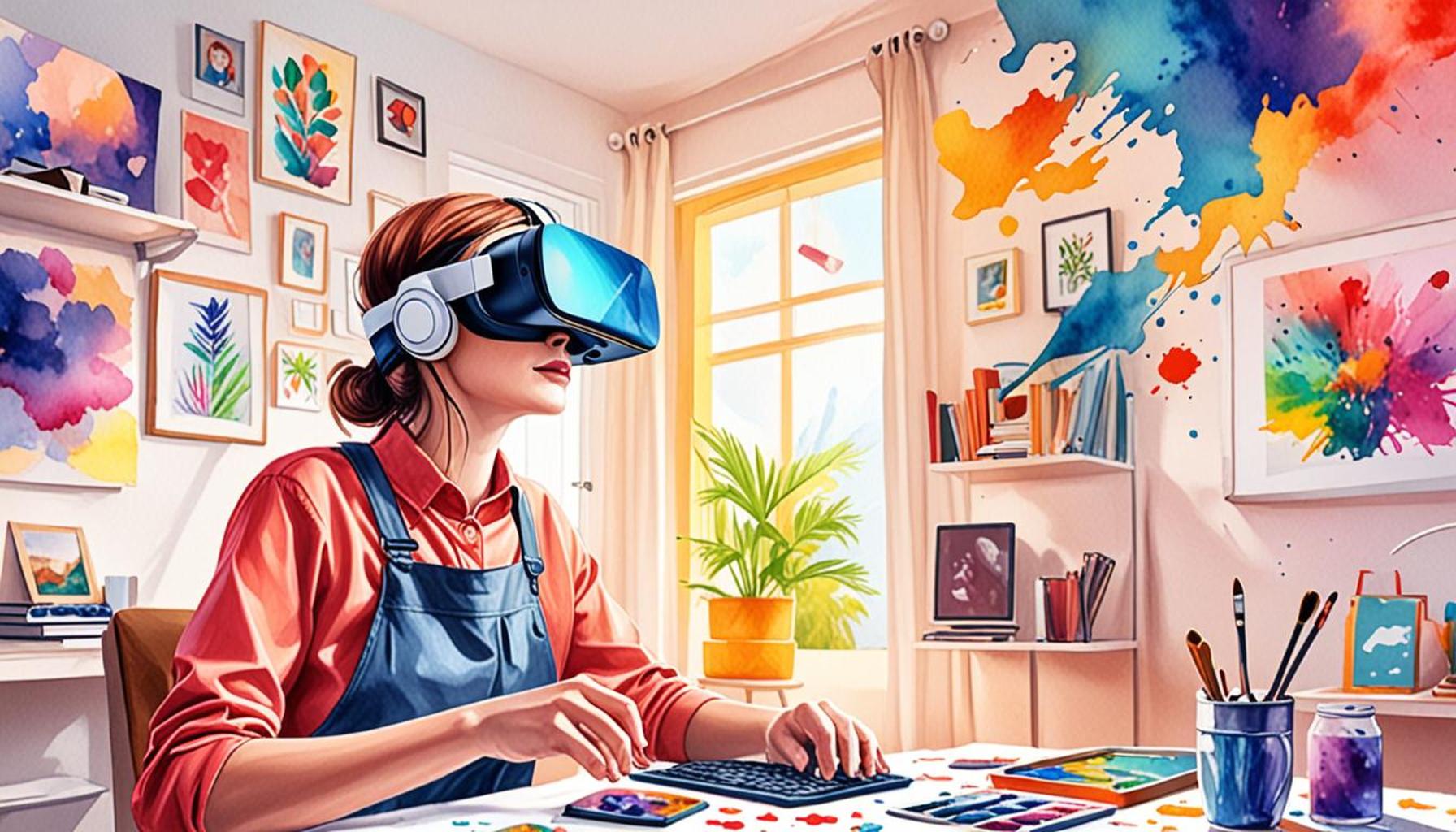
The rapid advancement of technology has paved the way for new approaches to cognitive training, particularly in the realm of memory enhancement. Among these innovations, virtual reality (VR) stands out as a groundbreaking tool that is reshaping how individuals engage with memory challenges. This immersive experience not only captures attention but also provides unique opportunities for learning and mental exercise.
Key Features of Virtual Reality in Cognitive Training
- Immersive Learning Environments: VR creates realistic settings that mimic real-life scenarios, enhancing engagement and retention. For instance, a student learning about historical events can be virtually transported to ancient Rome, experiencing the environment and interactions that influence memory recollection. This level of immersion allows for deeper emotional connections to the material, increasing the likelihood of retention.
- Adaptive Challenges: Programs can automatically adjust difficulty levels based on the user’s performance, ensuring tailored training. For example, a user struggling with memory recall may start with simpler tasks that gradually increase in complexity as they improve, providing a customized experience that maximizes learning potential. Such adaptivity is crucial for keeping learners motivated and challenged without feeling overwhelmed.
- Real-Time Feedback: Participants receive immediate insights on their performance, allowing for quick adjustments and improvements. This feature is particularly vital in memory training, where users can immediately understand which strategies are effective and which need tweaking. For instance, if a player fails to remember specific sequences in a VR memory game, the system might analyze their response time and suggest techniques to improve recall, such as visual or auditory cues.
Research indicates that VR can lead to significant improvements in tasks such as recall and recognition, making it an exciting development in cognitive therapy. A study published in the journal “Frontiers in Psychology” highlights that participants who trained using VR demonstrated greater recall ability compared to conventional methods, suggesting that this innovative approach may be beneficial for various populations, including those with memory impairments or conditions such as Alzheimer’s disease.
Furthermore, the accessibility of VR technology is on the rise, with the decreasing cost of VR headsets and intuitive software designed for diverse user groups. Virtual reality experiences are now being utilized in schools, rehabilitation centers, and even at home, promising wider application across various age demographics. With platforms specifically designed for seniors offering memory-enhancing games that stimulate cognitive function, it becomes evident that the future of cognitive training is not just innovative—it’s transformative. As we continue to explore the intersection of technology and memory, the potential for improved mental health and cognitive resilience is clearly profound, inviting individuals and professionals alike to discover new frontiers in memory enhancement.
DISCOVER MORE: Click here to learn about the impact of memory challenges on cognitive health
Virtual Reality’s Impact on Memory Training
As the realm of cognitive training continues to evolve, the integration of virtual reality (VR) is rapidly becoming a cornerstone of innovative approaches to enhance memory. This digital frontier not only captivates users but also tailors their learning experiences in ways previously unimaginable. The transformative power of VR lies in its ability to recreate environments and scenarios that challenge the brain to engage with memory tasks in a more dynamic manner.
Unleashing the Power of Engagement
One of the most striking features of VR in memory training is its unparalleled capacity for engagement. Traditional memory exercises often lack the stimulating elements that keep participants focused. In contrast, virtual reality transports users into vibrant, interactive worlds where memory tasks become intertwined with rich storytelling and immersive challenges. For example, when a user navigates a virtual museum, not only does the aesthetic appeal capture attention, but the contextual interactions with displayed art or artifacts allow for enhanced memory recall. This engaging process transforms rote memorization into a fascinating adventure that participants look forward to revisiting.
Applications Across Various Sectors
- Education: Schools and universities are exploring VR tools that enhance learning across subjects. History lessons can become realistic battles or critical events, allowing students to experience the content rather than simply reading it.
- Healthcare: In therapeutic settings, VR is being used to help patients recover from conditions that impair memory, such as traumatic brain injuries or Alzheimer’s disease. Controlled environments can simulate everyday tasks where patients practice recall and problem-solving.
- Corporate Training: Businesses have started adopting VR training modules that include memory retention exercises for employees, emphasizing skills from customer service to technical training, honing their ability to remember critical procedures or customer interactions.
Moreover, the ability for VR to foster group interactions also strengthens social learning. In collaborative memory challenges, participants can engage with peers in virtual spaces, sharing strategies and experiences. This social dimension not only promotes teamwork but also mimics real-life situations where memory information is often reinforced through discussion and interaction. Evidence suggests that these social memory challenges can lead to improved outcomes, as individuals learn to navigate both cognitive tasks and interpersonal dynamics.
While the possibilities of VR in cognitive training present an exciting frontier, it is essential to recognize the ongoing research focused on optimizing these tools for maximum efficacy. With studies demonstrating the efficacy of VR training in enhancing recall and recognition skills, the groundwork for future advancements is solid. As researchers, educators, and healthcare professionals come together to develop these technologies, the implications for improved mental health and cognitive agility may resonate across generations, inviting further exploration into this promising intersection of technology and cognitive training.
As we delve deeper into the utilization of Virtual Reality (VR) within cognitive training, it’s essential to highlight how this innovative technology is revolutionizing memory challenges. One of the remarkable aspects of VR is its ability to create immersive environments that simulate real-life scenarios, allowing users to engage their cognitive skills in a dynamic way. This unique approach significantly enhances engagement and retention, setting it apart from traditional training methods.Moreover, VR can adapt to individual users’ needs, providing personalized cognitive training experiences that cater to different learning styles and memory abilities. The technology enables the creation of personalized memory challenges that progressively adapt in difficulty. This personalized touch encourages users to push their cognitive limits while also boosting confidence and motivation.Research shows that participants who engage in VR-based cognitive training exhibit a notable improvement in areas such as working memory, spatial awareness, and problem-solving skills. For instance, a study published in the journal *Frontiers in Psychology* found that older adults participating in VR cognitive training showed substantial improvements in their cognitive functions compared to those who underwent conventional training exercises. Additionally, VR has the potential to appeal to various demographics, from children developing foundational cognitive skills to seniors seeking to maintain mental acuity. Its versatility ensures broad applicability, paving the way for its integration into educational institutions, rehabilitation frameworks, and even workplace training programs.Furthermore, the social component of VR cannot be overlooked. Multi-user environments allow for collaborative memory challenges, fostering teamwork and communication skills among participants. This interactive aspect enhances cognitive engagement and leads to a more enjoyable training experience, appealing to users of all ages.In summary, the integration of Virtual Reality in cognitive training presents an exciting frontier in enhancing memory challenges. With its ability to create immersive experiences tailored to individual needs, it holds the promise of making cognitive training more effective, engaging, and accessible than ever before. As this technology continues to evolve, it will undoubtedly reshape the landscape of cognitive enhancement, leading to innovative breakthroughs that can enrich our understanding of human memory. Exploring these advancements further may open new avenues for understanding how we can enhance cognitive processes through virtual mediums. As we investigate this exciting domain, the potential of Virtual Reality in cognitive training becomes increasingly evident, urging us to consider its implications for the future of memory and learning.
DISCOVER MORE: Click here to enhance your strategy skills
Expanding the Horizon of Cognitive Rehabilitation
The incorporation of virtual reality into cognitive rehabilitation programs represents a groundbreaking approach, particularly for individuals recovering from brain injuries or neurological disorders. In clinical settings, VR can simulate realistic situations that might be otherwise too challenging or impossible to recreate in a traditional therapy environment. For example, patients can practice daily living skills, such as grocery shopping or navigating public transportation, in a safe, controlled virtual space where mistakes can be made without real-world consequences. This hands-on experience has been shown to improve not only memory but overall functionality and confidence.
Tailored Experiences through Personalization
One of the most significant advantages of VR technology in memory training is its ability to create personalized experiences tailored to individual needs. By leveraging user data and cognitive assessments, researchers and developers can design VR scenarios that specifically target areas of memory that require strengthening. For instance, someone with Alzheimer’s may benefit more from environments that stimulate past life experiences, while a young adult with working memory deficiencies may engage better with fast-paced, competitive challenges. The adaptability of VR ensures that cognitive training is both relevant and stimulating, promoting effective engagement through tailored challenges.
Scientific Validation and Future Directions
As innovative memory challenges usher in a new era of cognitive training, scientific validation remains crucial in establishing their effectiveness. Studies are increasingly focused on quantifying the impacts of VR-based training, with emerging data suggesting notable improvements in cognitive performance. Recent research has indicated that participants who underwent VR memory training exhibit an increase in memory recall scores by up to 30% when compared to traditional methods. This evidence positions virtual reality not just as a trend but as a legitimate tool for enhancing cognitive capabilities.
Furthermore, the rapid growth of Artificial Intelligence (AI) integration into VR systems is poised to elevate memory training experiences even further. With AI-driven analytics capable of assessing user performance in real-time, VR can adapt challenges on-the-fly, providing a level of customization previously thought impossible. This evolution suggests that the future of cognitive training will be marked not only by immersive experiences but intelligent, responsive environments that can learn and grow with the user.
Ethical Considerations and Accessibility
While the advancement of VR technology in memory training is commendable, it is accompanied by critical ethical considerations, particularly regarding accessibility. As VR programs become mainstream, it is imperative that developers ensure these tools are available to diverse populations, including those with disabilities or limited access to technology. One potential solution lies in cross-platform compatibility, allowing VR experiences to be accessible on various devices, including mobile phones and standard computers. Such measures could democratize cognitive training, ensuring that memory-enhancing experiences reach those who would benefit from them the most.
In conclusion, the integration of virtual reality into cognitive memory challenges is reshaping the landscape of memory training. As we witness the continuing evolution of this innovative technology, the potential benefits for education, healthcare, and corporate training are vast. With ongoing research and ethical considerations at the forefront, the promise of VR in transforming cognitive training is not just a possibility but an exciting reality on the horizon.
DIVE DEEPER: Click here to discover more
Conclusion: A Transformational Shift in Cognitive Training
The journey of virtual reality in cognitive training is just beginning, yet its impact is already profound. By merging cutting-edge technology with cognitive rehabilitation, VR is not merely enhancing traditional methods but is revolutionizing the way we understand and develop memory functions. From creating immersive, personalized experiences that adjust to individual cognitive needs to fostering meaningful engagement in rehabilitation, VR offers a myriad of tools that hold the potential to change lives.
With research backing its efficacy and showing improvements in memory recall by as much as 30%, VR is positioning itself as a crucial resource in both clinical settings and everyday life. The incorporation of AI further enhances this technology, ensuring a dynamic training environment that evolves alongside the user’s cognitive development. This adaptability signifies a leap towards more effective memory training solutions tailored to the unique challenges faced by individuals, including those with neurological disorders.
However, as this innovative technology gains traction, the importance of ethical considerations and accessibility cannot be overstated. Ensuring that VR-based cognitive training is inclusive will be essential in providing equitable opportunities for all individuals, regardless of their background or resources. Looking forward, as VR technology becomes more sophisticated and accessible, we stand on the brink of a new chapter in cognitive training—one where cognitive abilities can be significantly improved, enhancing not only memory but fostering greater independence and confidence among users. Embracing these innovative memory challenges is crucial, as they represent not just a technological advancement, but a new horizon in human cognition.