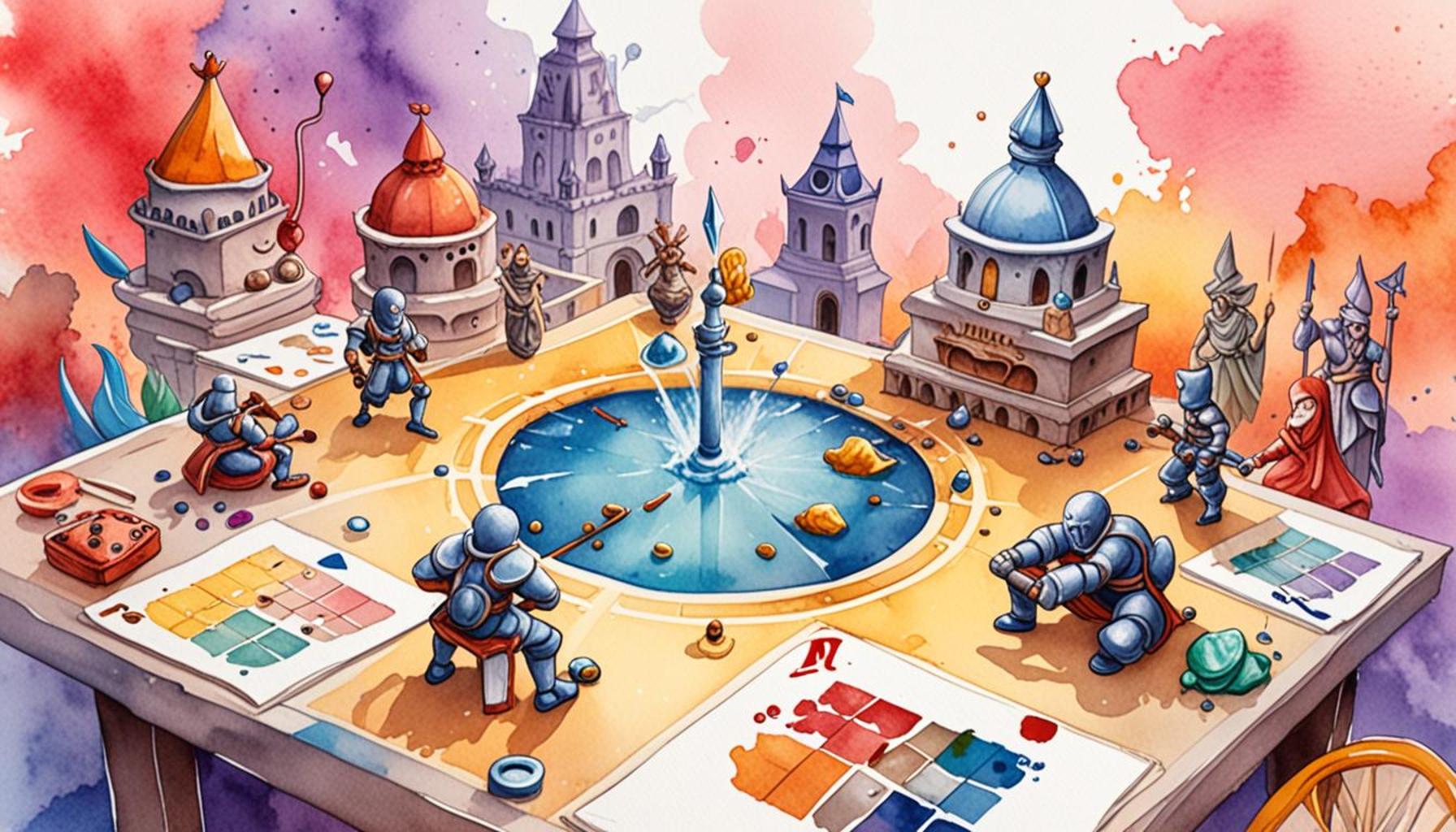
Development of Cognitive Skills Through Strategy Games: A Case Study

Exploring the Cognitive Advantages of Playful Strategy Engagement
In today’s fast-paced and technology-driven world, the charm of traditional and modern strategy games is reclaiming its place in our daily lives, providing a refreshing contrast to the instant gratification of many digital pastimes. From board games like chess and Settlers of Catan to video games like Age of Empires and StarCraft, these games do more than entertain—they serve as powerful tools for cognitive enhancement, engaging players across various ages and backgrounds.
Benefits of Strategy Games
- Critical Thinking: Strategy games require players to dissect complex scenarios and anticipate opponents’ actions. For instance, in chess, players must evaluate potential moves not only for themselves but also predict the consequences of their opponent’s responses. This analysis cultivates a mindset adept at handling complexity and nuance.
- Problem-Solving: Challenges presented in these games often necessitate creative and innovative solutions. Take the game of Risk, where global dominance is the goal; players must strategize not only how to conquer territories but also manage limited resources and react to opponents’ tactics, enhancing their ability to think outside the box.
- Decision-Making: Players learn to make informed decisions rapidly, weighing risks versus rewards. A classic example is the online multiplayer game League of Legends, where players must decide their actions in real time based on shifting dynamics within the game and their teammates’ choices.
- Collaboration: Many strategy games encourage teamwork and effective communication. Games like Pandemic require players to work together to eradicate diseases, fostering cooperation and collective strategy formulation, which can mirror real-world teamwork in workplace settings or community activities.
Research underscores that the benefits of strategy games extend beyond mere entertainment. A focused case study explored the development of cognitive abilities through strategic play, revealing:
- Engagement levels that sustain player interest, often resulting in longer play sessions that contribute to deeper cognitive processing.
- Noticeable improvements in memory retention and concentration, proven by enhanced performance on tasks requiring sustained attention and recall.
- Strategies developed in-game that have practical applications in real-life scenarios, such as conflict resolution and resource management, demonstrating a clear link between gaming experiences and daily challenges.
Furthermore, as we examine the intricate relationship between strategy games and cognitive development, it becomes apparent that these entertaining tools function as essential drivers of mental agility. They not only captivate players but also empower them with skills that are increasingly valuable in our modern, dynamic environment. With the rising acceptance of gaming as an educational and developmental tool, it invites educators and parents to rethink the potential benefits of engaging children and adults alike in strategic play.
DISCOVER MORE: Click here to enhance your mental agility
The Psychological Foundations of Strategy Games and Cognitive Development
The intricate relationship between psychology and gameplay is evident in the realm of strategy games, where players face high-stakes decisions and complex scenarios that demand cognitive engagement. Recognizing this connection prompts a deeper inquiry into how such games serve as a breeding ground for essential cognitive skills. The cognitive development fostered by strategic play is not merely anecdotal; a growing body of research highlights specific psychological processes that these games enhance.

Engagement and Cognitive Processing
Cognitive engagement in strategy games operates on several levels, providing a multifaceted approach to skill enhancement. Key areas of focus include:
- Attention Control: Strategy games necessitate sustained attention and concentration, immersing players in environments where distractions can lead to downfall. Studies indicate that players of complex games demonstrate elevated attentional control when addressing tasks outside the gaming realm. For instance, research published in the Journal of Cognitive Psychology revealed that individuals engaged in tactical gameplay exhibited greater focus in academic and professional settings.
- Executive Function: Executive functions, including working memory, mental flexibility, and inhibitory control, can be significantly improved through strategy games. A case study published in the journal Psychological Science examined gamers’ improvements in working memory and cognitive flexibility post-gameplay, demonstrating transfer effects beneficial to real-world problem-solving and task management.
- Risk Assessment: Navigating uncertainties is inherent in strategic gameplay. Players learn to evaluate risks and rewards, honing their ability to make calculated decisions. The popular game, Magic: The Gathering, for example, requires players to assess card combinations and potential outcomes, teaching valuable lessons about evaluating choices in less structured environments.
The implications of these cognitive advantages are manifold and resonate with educators and psychologists alike. Notably, the adaptability required in strategy games may correlate with enhanced performance in learning environments, where adaptability is key to success. In fact, numerous educational institutions across the United States have begun incorporating strategy games into their curricula, recognizing their power in promoting critical thinking and analytical skills.
Real-World Application of Skills Acquired
Perhaps one of the most compelling aspects of strategy games is their capacity for translating skills into real-life applications. Observations from a longitudinal study on children’s interaction with strategy games illuminated several relevant outcomes:
- Children exhibiting enhanced strategic thinking in gameplay also displayed improved academic performance, particularly in subjects such as mathematics and science, where logic and reasoning are vital.
- Social interactions during gameplay cultivated important soft skills such as negotiation, conflict resolution, and teamwork, reflecting the collaborative dynamics often observed in workplace settings.
- Players demonstrated an increased propensity for creative thinking, leading them to innovate and pivot in response to challenges—skills indispensable in today’s ever-evolving job market.
As educators and parents prioritize methods of effective learning and cognitive skill enhancement, it becomes crucial to recognize the role of strategy games as not just instruments of fun but powerful tools for personal development. The continued investigation into the cognitive benefits of strategy games will only enrich our understanding of their potential as a catalyst for successful learning outcomes.
| Category | Details |
|---|---|
| Enhanced Problem Solving | Strategy games require players to think critically and evaluate multiple solutions to complex challenges, thus improving overall problem-solving abilities. |
| Improved Memory Retention | Engagement in strategy games enhances cognitive functions like memory, as players must recall rules, strategies, and opponent movements to succeed in gameplay. |
In exploring the *Development of Cognitive Skills Through Strategy Games*, this case study highlights how players develop enhanced problem-solving abilities through strategic thinking required in gameplay scenarios. Players are consistently challenged to devise solutions and navigate obstacles, sharpening their analytical skills along the way. Additionally, the immersive experience of these games significantly boosts memory retention. As participants familiarize themselves with intricate game rules, strategies, and the movements of opponents, they cultivate stronger memorization skills that transcend the gaming environment, proving beneficial in everyday decision-making.By engaging with strategy games, individuals unlock new cognitive pathways, inviting them to practice and refine essential life skills while enjoying a competitive yet stimulating activity. This case study aims to shed light on these profound effects, encouraging further exploration into how recreational gaming influences cognitive development.
DISCOVER MORE: Click here to enhance your mind
Fostering Social Skills and Emotional Intelligence through Strategic Interactions
While the enhancement of cognitive skills through strategy games is well-documented, an equally compelling dimension lies in their ability to foster social skills and emotional intelligence. As players navigate complex challenges, they engage in rich interactions that can lead to substantial personal growth.
Enhanced Communication Skills
Strategy games often require players to communicate effectively, whether they are negotiating alliances, strategizing with team members, or discussing tactics with opponents. The collaborative nature of many of these games nurtures vital communication skills essential in everyday life. For instance, games like Risk and Catan foster dialogue and negotiation among players, as success often hinges on clear and persuasive communication.
A study from the Journal of Educational Psychology highlighted that children who engaged in cooperative gameplay showed marked improvement in their verbal communication skills. The ability to articulate thoughts and listen actively are pivotal skills that translate into both academic and social contexts. In fact, educators have noted that students who play strategy games tend to participate more actively in class discussions, showcasing the transfer of these communication abilities to real-world scenarios.
Building Emotional Resilience
Another profound aspect of playing strategy games is the emotional growth players experience through victory and defeat. Learning to cope with losses, manage frustration, and celebrate accomplishments are critical components of emotional resilience, which is particularly vital in today’s fast-paced world. Players frequently face setbacks, attempting to reassess their strategies and adapt accordingly—skills that are inherent to emotional regulation.
The American Psychological Association recently published findings that link engagement in strategy gaming with improved emotional intelligence among youth. By encountering diverse emotional scenarios, players refine their ability to empathize with others and understand different perspectives, critical traits in both personal and professional relationships. The learning experiences from these games thus extend well beyond the table, equipping players with emotional tools applicable in daily life.
Cultural Awareness and Diversity
Moreover, strategy games often incorporate elements of history and culture, encouraging players to gain insights into diverse perspectives while promoting cultural awareness. Games such as Age of Empires and Civilization famously blend fun with education, allowing players to engage with historical narratives and investigate the complexities of past societies. This exploration fosters curiosity and appreciation for cultural diversity, essential traits in an increasingly globalized world.
A survey conducted by the Entertainment Software Association revealed that players who enjoy historically themed strategy games report higher levels of cultural understanding. Understanding various cultures’ strategic methodologies and decision-making styles positively influence the perspectives players hold about the world around them.
As we continue to analyze the impact of strategy games, it becomes increasingly clear that their benefits stretch beyond cognitive skill development. From strengthening emotional resilience and communication skills to fostering cultural awareness, these games emerge as holistic tools for personal growth, providing players not just with entertainment, but valuable life skills that shape their interactions in every arena of life.
DISCOVER MORE: Click here to unlock the secrets
Conclusion
In summary, the exploration of how strategy games contribute to the development of cognitive skills unveils a multifaceted landscape of benefits that extend beyond mere entertainment. By engaging in these challenging games, players enhance their problem-solving, critical thinking, and decision-making abilities, which are essential in educational settings and professional environments alike. The case study presented illustrates the transformative power of strategy gaming, revealing that players frequently experience notable improvements in their cognitive functionalities.
Moreover, the social dimensions of strategy games cannot be overlooked. As participants navigate intricate interactions, they develop communication skills and emotional intelligence that prove invaluable in real-life situations. The ability to articulate thoughts, negotiate, and empathize with others positions players advantageously both personally and professionally. These skills, acquired through the gameplay experience, translate seamlessly into the complexities of everyday life, underscoring the games’ relevance as educational tools.
Lastly, the incorporation of historical and cultural elements in strategy games fosters a sense of cultural awareness among players, preparing them to thrive in a diverse world. By understanding various perspectives, players not only become more informed but also cultivate an appreciation for diversity, nurturing global citizens prepared to engage with the complexities of modern society.
As we look to the future, it is worth considering how educators and parents can harness the potential of strategy games to further enhance cognitive and social skills in younger generations. With an increasing number of resources available, exploring the integration of strategy gaming into the curriculum may serve as a progressive approach to education and personal development—a prospect that merits further investigation and discussion.