Cross-Generational Memory Challenges: Engaging Families Through Multi-Generational Puzzle Play
A Timeless Tradition: The Role of Puzzles in Family Bonds
Memory challenges can affect individuals across all ages, creating a unique gap between generations. This phenomenon often signifies that family members share varying experiences and realities that can lead to misunderstandings. However, one engaging solution is multi-generational puzzle play.
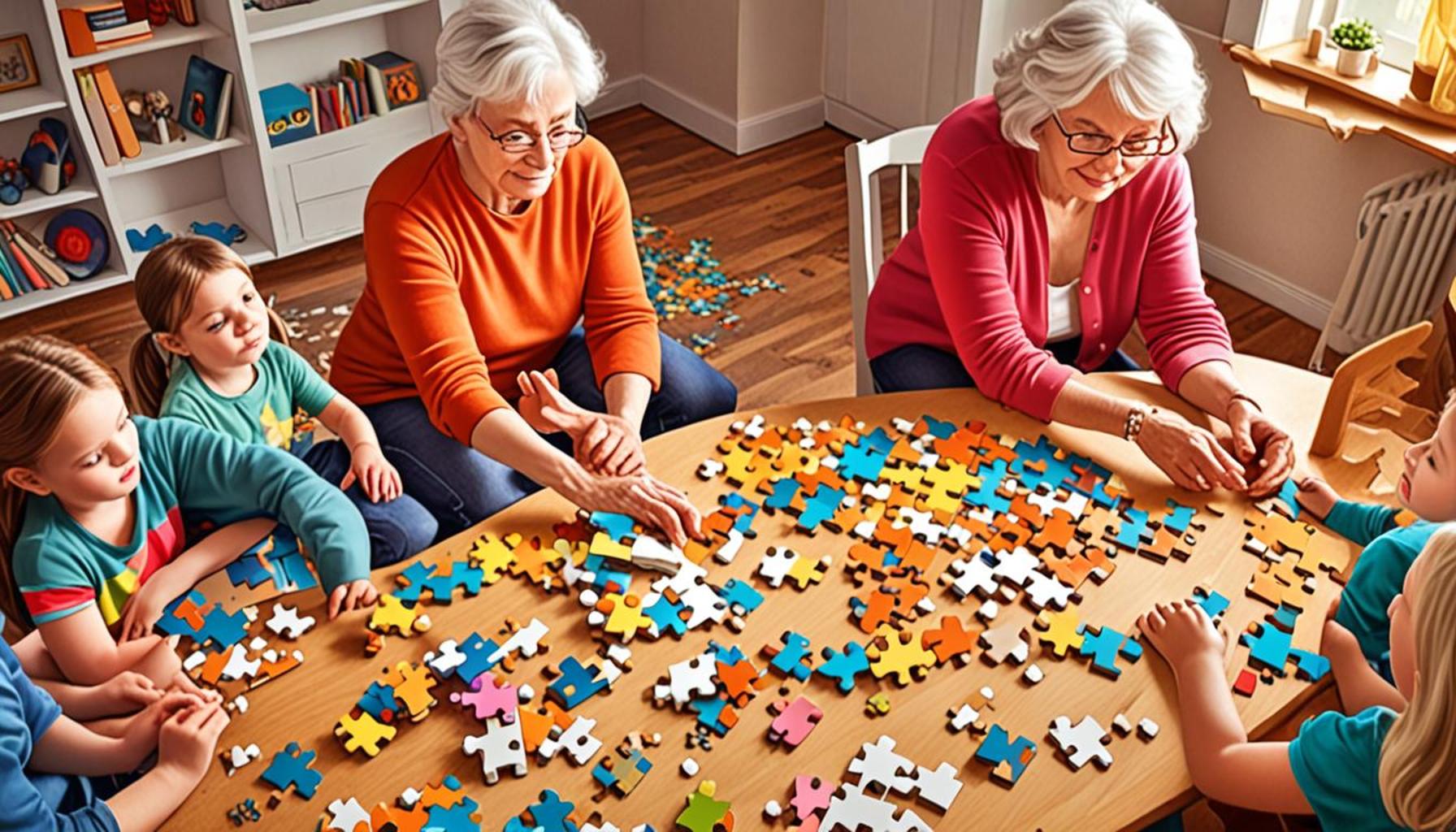
Utilizing puzzles as a family activity not only bridges the memory gap but also enhances communication and collaboration among family members. When families gather for puzzle time, they embark on a journey where each piece of the puzzle becomes a catalyst for conversation, laughter, and learning. Consider the following benefits that contribute to the overall well-being of families participating in this timeless activity:
- Stimulates cognitive function: Puzzles require players to identify patterns, visualize the final picture, and apply critical thinking skills. Research indicates that engaging in such activities can significantly enhance cognitive functioning in children and adults alike, promoting mental agility and memory retention.
- Encourages teamwork: Completing a complex puzzle often necessitates the collaboration of multiple family members. Each individual might offer their unique strengths, from spatial reasoning to organizational skills, which fosters a sense of unity. This collective effort not only makes the task enjoyable but also reinforces the idea that many hands can make light work.
- Facilitates sharing of stories: Each piece of a puzzle can evoke memories tied to family history, seasonal traditions, or even personal anecdotes. As family members place pieces together, they are often inspired to share stories about previous experiences, thus deepening their connections.
As families gather around the table, they intertwine their perspectives, turning the collective challenge into a rewarding experience. Puzzles can serve as a bridge for discussions that might otherwise be avoided, providing a comfortable backdrop for sharing feelings and thoughts. With many adults facing memory-related issues, such as mild cognitive impairment, engaging in these games can alleviate stress while heightening familial connections.
In recent studies, families reported impressive increases in emotional bonding and engagement when puzzles were included in their playtime. For instance, a family in Ohio shared that after initiating weekly puzzle nights, their teenage children began to open up more about their lives, leading to significantly improved relationships. By tapping into a treasure trove of memories, families reconnect through this universally appealing pastime.
Through multi-generational puzzle play, families not only dedicate time to one another but also realize the potential of shared memory experiences that can enrich their relationships. This engaging activity holds the power to turn simple evenings into cherished family traditions, contributing to a legacy of connection that can be passed down through generations. Ultimately, puzzles offer much more than mere entertainment; they are an invaluable tool for fostering understanding, empathy, and love across ages within families.
DIVE DEEPER: Click here to uncover essential insights
Unlocking Cognitive Connections: The Science Behind Puzzle Play
Engaging in multi-generational puzzle play is not merely a fun way to pass the time; it also holds significant cognitive benefits that can help families collaboratively tackle memory challenges. Scientific research has demonstrated that such interactive activities serve as effective exercises for the brain, particularly in contexts where generational memory gaps present obstacles to communication. As families assemble pieces together, they inadvertently stimulate not just nostalgia, but essential cognitive skills.
The experience of piecing together intricate puzzles cultivates a rich environment for cognitive development. Here are some of the key benefits that highlight how puzzle play acts as a conduit for cross-generational engagement:
- Enhances problem-solving abilities: Puzzles require children and adults to approach challenges with persistence and creativity. This process enhances their ability to solve problems in various aspects of life, ultimately improving their adaptability in everyday situations.
- Boosts memory retention: Engaging in puzzle-solving facilitates the development of memory skills. Research indicates that activities requiring visual-spatial reasoning and memory recall can significantly delay cognitive decline in older adults while enhancing similar skills in younger generations.
- Encourages patience and focus: Completing a puzzle can be a time-consuming endeavor that necessitates sustained attention and patience. These qualities, when shared among family members, help to fortify emotional resilience, teaching younger generations the value of persistence.
Additionally, the role of puzzles in boosting interpersonal skills cannot be overstated. Working together towards a common goal not only strengthens bonds but also fosters communication skills. During puzzle time, families are often prompted to discuss strategies, share opinions, and negotiate positions, making the entire process a learning experience in itself.
Modern technology has introduced a variety of puzzle formats to choose from – from traditional jigsaw puzzles to digital puzzle apps that can be played on tablets. While the medium may vary, the core memory-building and bonding experience remains fundamental. Research points to the fact that families who integrate traditional games into their routine often maintain more robust relationships, highlighting the shared experience that puzzles provide.
In addition, social interaction during puzzle play is equally crucial in familiarizing younger generations with their family histories. As grandparents share stories tied to a particular puzzle’s theme—be it a landscape representing a family vacation spot or an image of a beloved pet—the act of puzzle-solving transforms into a narrative experience. It nurtures deeper connections and a sense of belonging, allowing family members to appreciate their unique histories while building new memories together.
As families navigate the intricacies of cross-generational memory challenges, puzzle play emerges as a compelling method to spark conversations, promote cognitive growth, and enhance emotional bonds. What better way to foster a legacy of unity than through the shared satisfaction of solving a puzzle together? This simple yet powerful pastime is an enduring testament to the ways families can engage, educate, and enrich one another across all ages.
| Category | Key Features |
|---|---|
| Cognitive Development | Enhances problem-solving skills and memory retention for all ages. |
| Social Interaction | Promotes bonding among family members, fostering communication and teamwork. |
| Inclusivity | Accessible for various skill levels, making it suitable for different generations. |
| Emotional Well-being | Boosts self-esteem through achieving shared goals and completing puzzles together. |
Engaging in multi-generational puzzle play provides numerous benefits, enhancing cognitive development while offering adults and children alike the opportunity to sharpen their problem-solving skills. This engaging format also actively improves memory retention across age groups, making it both an entertaining and educational experience.Moreover, puzzle play serves as a vital avenue for social interaction, where family members can bond, communicate, and develop their teamwork capabilities. By encouraging collaboration on various challenges, families instill a stronger sense of connection and support.Inclusivity stands as another remarkable aspect of multi-generational puzzles, welcoming participation from individuals of different skill levels and backgrounds. This quality ensures that all family members can contribute, thereby enriching the overall experience.Finally, the emotional benefits of solving puzzles together cannot be ignored. Achieving shared goals boosts self-esteem and enhances feelings of accomplishment, ultimately deepening familial ties through shared achievements. This combination of cognitive stimulation and emotional growth highlights the immense value of cross-generational puzzle play for families eager to nurture both their minds and relationships.
LEARN MORE: Click here to enhance your skills
Finding Common Ground: The Social Dynamics of Puzzle Play
In addition to the cognitive benefits, multi-generational puzzle play serves as a unique platform for fostering interpersonal relationships among family members. The act of collaboratively working towards a shared objective creates an environment ripe for both conversation and camaraderie, breaking down barriers that may exist between generations. This is particularly salient in the contemporary digital age, where distractions from technology can create rifts in communication.
One of the remarkable qualities of puzzle play lies in its ability to foster a sense of collaboration. When family members from different generations come together to tackle a puzzle, they engage in collective problem-solving that transcends age differences. Young children learn to respect the insights of their elders, while older family members often discover new perspectives from younger participants. This reciprocal exchange promotes mutual respect and understanding, essential components that can potentially bridge the generational divide.
- Facilitates storytelling: As puzzles are pieced together, they often incite nostalgia, prompting grandparents and parents to share stories from their past. These anecdotes create a rich tapestry of family history, enabling younger members to connect with their lineage on a deeper level. Such storytelling fosters a sense of identity that is often lost in today’s fast-paced world.
- Builds teamwork skills: Successfully completing a puzzle involves not just individual input but teamwork. Family members learn to communicate effectively, delegate tasks based on strengths, and strategize their approach. These skills not only benefit the puzzle-solving process but also translate into essential life skills for children as they navigate school projects and social interactions.
Moreover, puzzles can address socio-emotional learning, creating safe spaces for expressing emotions and vulnerabilities. The gentle competition that can arise as families race against the clock to complete a puzzle often leads to laughter and shared joy. This environment fosters a sense of belonging and connection, reducing feelings of isolation that many individuals experience, especially elderly family members facing memory challenges.
Statistics bolster the significance of such bonding experiences. A study conducted by the American Psychological Association highlights that families who engage in regular group activities report higher satisfaction levels within their familial relationships. Engaging in activities like puzzle-solving provides a structured yet relaxed setting for interaction, making it easier for family members to share and connect.
Modern Tools: Expanding the Puzzle Play Experience
The dynamic landscape of puzzles has evolved significantly over the years. Digital platforms, such as mobile applications and virtual reality gaming, offer an alternative avenue for families unable to physically gather. While traditional jigsaw puzzles have always held an irreplaceable charm, digital puzzles encourage interaction between family members separated by distance. This modern pivot maintains the core values of teamwork and engagement while leveraging technology to enhance the experience.
These digital formats can also incorporate educational elements, such as history or geography themes, providing family members with a dual benefit of entertainment while enriching knowledge. By selecting puzzles centered around cultural or historical narratives, families can engage in discussions that deepen their understanding of shared histories and broaden their worldviews.
Ultimately, the countless options available in the puzzle domain make it easier than ever for families to engage in meaningful interactions. As the bonds formed through puzzle play deepen, families simultaneously tackle cross-generational memory challenges, creating an enriching tapestry of shared experience and meaningful connections that can be cherished for years to come.
DISCOVER MORE: Click here to dive deeper into the fascinating world of logic puzzles
Conclusion: Uniting Generations Through Puzzle Play
Engaging families in multi-generational puzzle play offers a powerful antidote to the cross-generational memory challenges that many families face today. As we have seen, puzzles not only enhance cognitive function but also promote a deeper understanding of familial bonds. The collaborative nature of working together towards a shared goal encourages open dialogue, nurtures respect among different age groups, and allows insights to flow freely between generations.
By fostering storytelling, puzzles encourage the sharing of history and memories, which serves to strengthen family identity and continuity. As younger generations learn about their roots through these narratives, they cultivate a rich sense of belonging that is crucial in today’s rapidly changing world. Additionally, the teamwork inherent in puzzle-solving builds critical life skills that extend beyond the table, shaping effective communicators and problem-solvers.
Embracing the advancements in digital puzzles can further enhance these interactions, bridging distances that technology often complicates. Families can now connect regardless of physical barriers, expanding the horizons of shared experiences through engaging and educational puzzles. These modern tools maintain the essence of puzzle play while incorporating elements that encourage discussion and exploration of varied themes.
As families continue to engage in meaningful interactions through puzzle-solving, they not only address memory challenges but also create cherished memories that strengthen their ties. The simple act of assembling pieces together transforms into a larger narrative of unity and collaboration, making puzzle play an invaluable resource for families navigating the complexities of modern life. Embracing this age-old pastime holds the potential to enrich familial relationships and foster understanding, laying the groundwork for future generations to follow.